
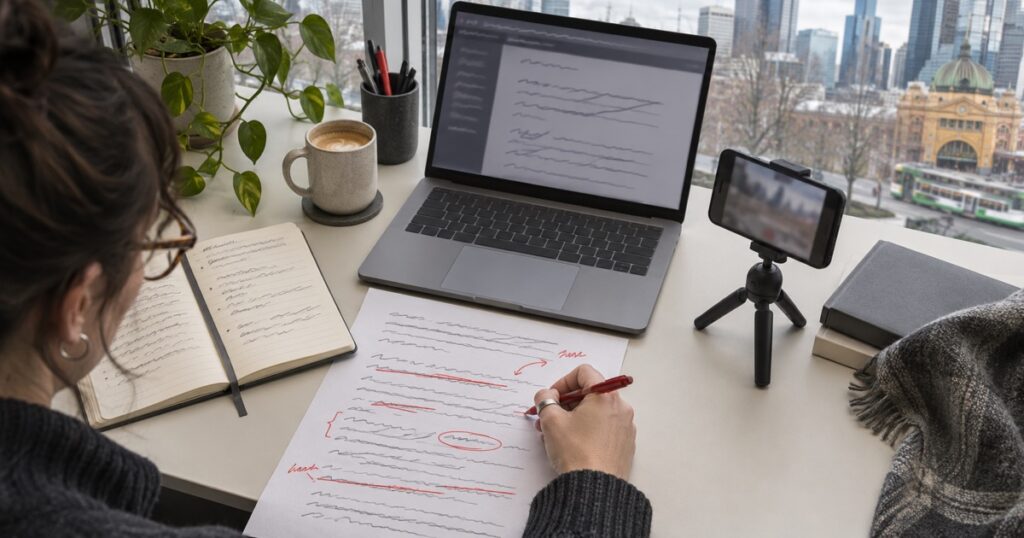
A copywriter writes the words that get someone to do something: book a call, sign up, buy, keep reading. Website pages, emails, ads, brochures, video scripts and social captions are all copywriting. The job is less about pretty sentences and more about knowing who’s reading and what they need to hear before they act.
That’s the short answer. The longer one depends on what your business needs written, and who should write it.
What a copywriter actually does in a week
A working copywriter’s week rarely looks like one long piece of writing. It looks more like this:
- rewriting a services page so a prospect understands the offer in ten seconds
- writing three subject lines for an email and choosing one
- turning a 40-minute interview with a client’s founder into a case study
- writing the script for a 60-second video, then cutting it to 30
- tightening a set of social captions so the point comes first
Most of the time isn’t spent typing. It’s spent reading the brief, asking questions, interviewing the people who know the subject and working out the one thing the reader has to take away. The writing is the last step.
Copywriter, content writer, journalist: what’s the difference?
The titles overlap, and plenty of people do all three. The difference is the job the words have to do.
A copywriter writes to get an action. The words sit on a landing page, in an ad or an email, and they’re judged by whether people click, call or buy.
A content writer writes to inform and build trust over time: blog articles, guides, newsletters. The reader might not act today, but they’ll remember who explained it well.
A journalist finds the story and gets it right. Journalism training is useful in both jobs, because it teaches you to interview well, find the angle the reader cares about and put it first. Our copywriting team comes from that background, which is why we start every job with questions rather than a template.
What should you hand to a copywriter?
The jobs that pay off fastest are the ones where the words carry real weight and you don’t have the time or distance to get them right yourself.
Your website. Most people check your site before they ever contact you, and they decide quickly whether you’re the right fit. Clear, specific service pages do more for enquiries than almost anything else you can fix in a week.
Emails and sales material. Proposals, onboarding emails, brochures and one-page explainers. Short formats where every line has to earn its place.
Video scripts and outlines. A good script makes a 60-second video feel effortless. For interview-style video, it’s often a list of sharp questions rather than lines to memorise.
Case studies. Your clients’ results, told so the client looks good and you get credit by association.
Anything that will be read by a lot of people. If 5,000 people will see it, the words deserve an hour of someone’s undivided attention.
When AI drafts are enough, and when they aren’t
AI writing tools are good at first drafts, summaries and filling a blank page. Plenty of businesses now use them for routine posts and internal documents, and that’s fine.
They struggle with the things that make copy work: knowing your clients, hearing how your best people explain what they do and finding the one detail that makes a reader trust you. A tool can’t interview your founder or notice that your clients keep asking the same question. A good copywriter can, and will often use AI to speed up the parts that don’t need a human.
How to brief a copywriter so you get it right the first time
A useful brief answers five questions:
- Who is reading? Be specific: “first-home buyers in Melbourne’s west”, not “everyone”.
- What should they do next? One action.
- What do they need to believe first? The doubts and questions in the way.
- What do we know that proves it? Results, examples, client words.
- Where will it live? Website, email, video, print. Each changes the length and the tone.
Then give the writer access to the people who know the subject. Thirty minutes on the phone with your best salesperson is worth more than a ten-page brand document.
Do you need a copywriter?
If your website gets visitors but not enquiries, your emails don’t get replies or your team keeps putting off the writing because it’s hard, then yes, it’s worth handing over. If you write well, enjoy it and have the time, keep doing it and get someone to edit.
We write website copy, case studies, articles and scripts for Melbourne businesses, as part of a monthly content retainer or as one-off jobs. Have a look at our copywriting services in Melbourne and send us the page you need written.