
Most business podcasts don’t fail because the idea was bad. They fail somewhere between episode three and episode six, when the novelty wears off and the work underneath shows itself.
Recording is the easy part. Podcast production is everything around it: deciding what the show is for, getting the right people in the room, editing, publishing and making each episode work harder than one upload. Here’s how it fits together, step by step, and where most shows come unstuck.
Start with one listener and one job
Before anyone picks a name or orders a microphone, answer two questions. Who is this show for? What should they know, feel or do after an episode?
“Anyone interested in our industry” is not an answer. “Small business owners in Melbourne’s north who are about to buy their first commercial property” is. A show with a specific listener is easier to plan, easier to book guests for and easier to promote.
The job matters too. A podcast that builds trust with prospective clients sounds different from one that keeps your existing members informed or puts your local community on the record. Our own show, Moonee Valley Voices, exists to tell the stories of people and businesses in our patch. Every booking decision comes back to that.
Pick a format you can keep up
The format you choose decides how much work each episode takes.
- Interview: you host, a guest brings the expertise. The easiest to sustain, as long as you can keep finding guests.
- Co-hosted conversation: two regulars talking through a topic. Lower booking effort, but it relies on chemistry.
- Solo: one voice, one topic. Quick to record, hard to make engaging for long.
Length should follow the content, not a rule. Twenty focused minutes beats fifty minutes of warm-up. Pick a release rhythm you can hold for a year, whether that’s weekly, fortnightly or monthly. A steady monthly show beats a weekly one that stops in March.
Decide audio only or video too
YouTube is now one of the biggest places people watch and listen to podcasts, and short clips on Instagram, LinkedIn and TikTok are often how a new listener first hears you. If you plan to use video at all, record it from day one. Adding cameras later means your back catalogue can’t be clipped.
Video podcast production adds work: cameras, framing, lighting and a bigger edit. It also gives you far more to publish from every session.
Recording: get the room right
Bad audio is the fastest way to lose a listener. A decent USB microphone in a quiet, soft-furnished room will get a solo show started. It gets harder once you add guests, more than one microphone or cameras.
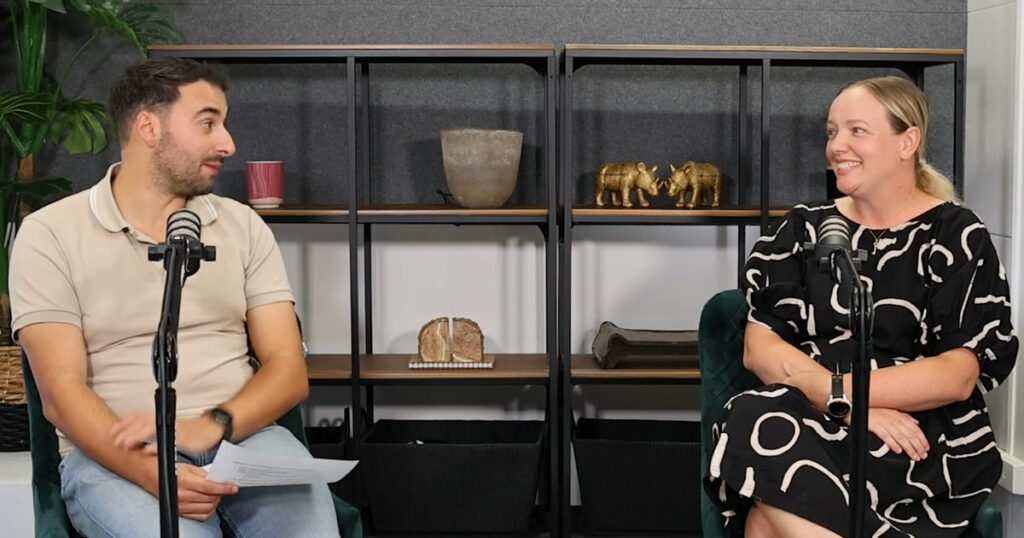
That’s where a staffed studio earns its keep. In our Essendon studio, our team sets the room up before you arrive and runs the microphones, cameras and lighting, so you can spend the hour talking, not troubleshooting. Guests turn up, sit down and record. For a business with a busy expert, that difference is usually what keeps a show going past episode six.
Whatever you record in, a few habits help:
- Send guests the topics in advance, not a script.
- Record a minute of room silence for the edit.
- Batch two or three episodes in one session when you can.
- Have one person whose job is to watch levels, not host.
Editing: where the show takes shape
A raw recording is not an episode. Editing removes false starts and long tangents, balances everyone’s voices and adds an intro, an outro and any music you’re licensed to use.
For video, the edit also cuts between camera angles and frames the conversation for widescreen and vertical. Decide early who edits. If it’s someone on your team, book their time in the calendar like any other job. If it’s us, we handle the edit through Credibility Clips, which turns a session into finished short videos with captions, ready to post.
Publishing: getting onto Spotify, Apple and YouTube
Your audio file goes to a podcast host, a service built to store episodes and publish them as an RSS feed. Spotify, Apple Podcasts and the other apps read that feed and deliver each new episode to followers automatically. You set the host up once, submit the feed to each app, and from then on publishing an episode is a single upload.
Video episodes go to YouTube separately. Each episode needs a title people would actually search for, a short description and show notes with any links you mentioned. If you’re starting a show with us, we’ll help you choose a host and get it onto Spotify, Apple Podcasts and YouTube.
Make every episode do more than one job
A 30-minute conversation holds a lot more than one upload. From a single episode you can usually pull:
- three to five short clips for Reels, LinkedIn and Shorts
- quote cards for your socials
- a written article for your website built from the best answers
- an email to your list
This is where podcast production pays for itself. The episode builds trust with the people who listen to all of it. The clips reach the people who never will.
Keep it going
The shows that last treat each episode as a production, not a favour. They keep a running list of guests and topics, book recording dates a month ahead and review what’s working every quarter: which episodes people finished, which clips travelled, which guests brought their own audience.
If you’d like help planning, recording and producing a podcast for your business, talk to us about podcast production. We’ll work out what fits before anyone presses record.